HOBBY 1
SENDING IT!
Agave Titanota
Published 18 October 2026 · 12:07 AM AEST
A very normal, very measured introduction to keeping a few small spiky plants alive.
Apologies everybody - I haven’t written my thoughts out in a mid-to-long form way in probably 15 years. It’ll get better I promise! Anyway, here goes!
For basically every hobby I’ve been invested in, it usually starts this way:
Ah, that’s kinda neat! → Let me look into that → Crossroads → ???
The crossroads are a point where I either drop the hobby, or I try and fail to not send it. Case in point, my journey with Agave Titanotas (or Oterois? We’ll get to that later)
1) Ah, that’s kinda neat!
I like cool rocks. I’ve figured out it’s probably closer to me enjoying the ability to collect the literal concept of texture and colour in the form of something that exists naturally... Pretty cool. Somehow somewhen, social media algorithms picked up on this trait of mine. It started showing me cool pots, ‘cuz pots are just man-made rocks right? Said cool pots sometimes had cool plants in them. The plants were kinda neat, and I used the infinite power of Google to figure out where to get one... I got three 😀.
2) Let me look into that
Not really knowing too much about them, I treated them the same way I treated my succulent-adjacent plants: low water, high light. Casual reading (let me look into that) told me to water it even less frequently, so that’s what I did. At some point, one of the three started developing root rot a few days after a watering. Crap. Off I went to my friendly local sycophant ChatGPT, and figured out my next steps.
- Remove rot
- Dry it out
- Repot
- ??? profit
I’ve never dealt with root rot before, but this seemed easy enough, so off I went lopping off leaves and roots and rot. The final product honestly seemed pretty decent considering my level of expertise.
…
To cut a long story short, it died. I honestly still don’t know why it died, because it seemed clean of rot and I let it dry, but I will not dwell on it here too much. Honestly, it demoralized me a bit, so I left it on the backburner. The spectre of rot haunted me, so I avoided watering the other two. They’re desert plants, right? Once a month should be fine. How often would a desert plant even get water anyway?
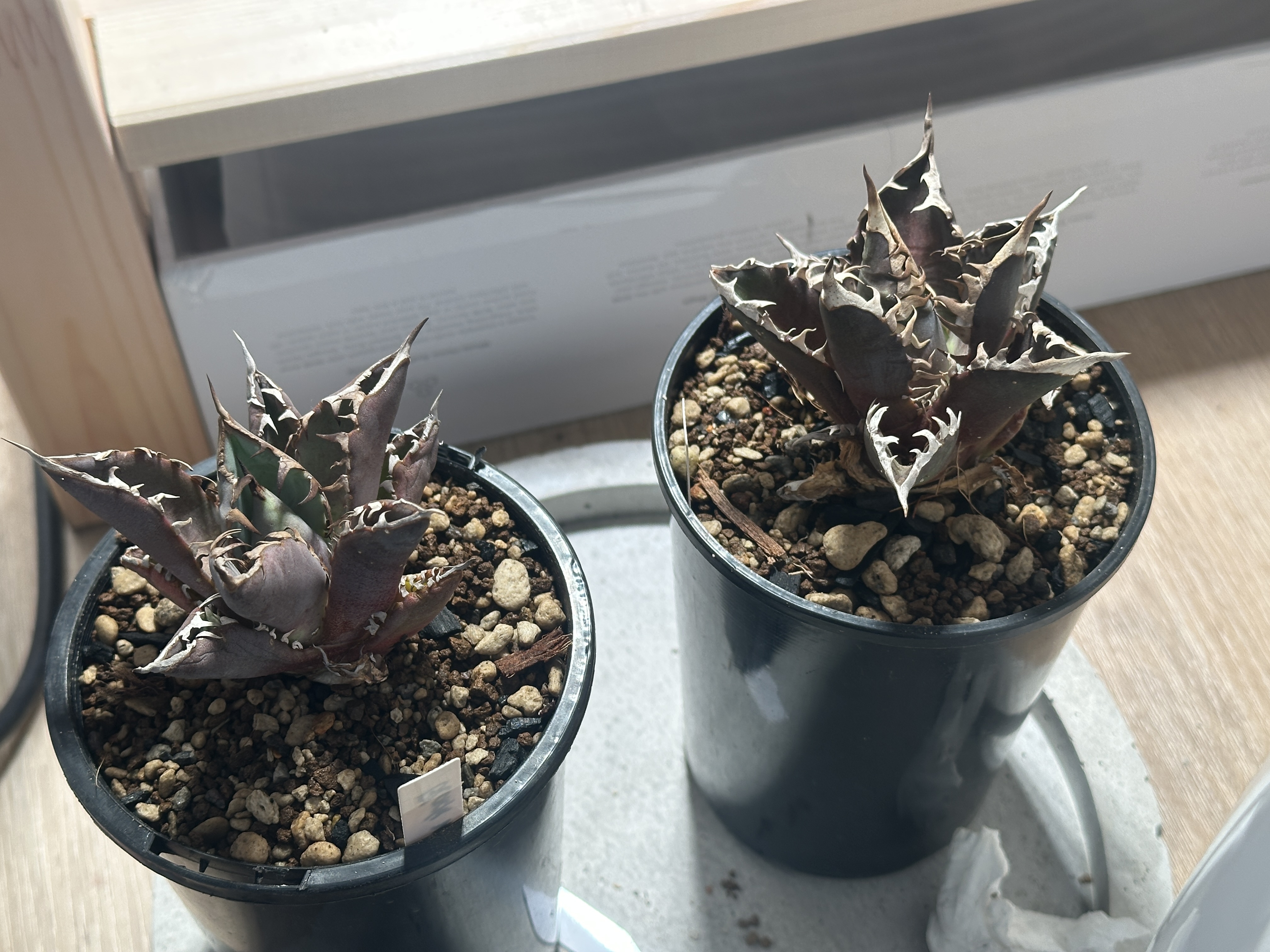
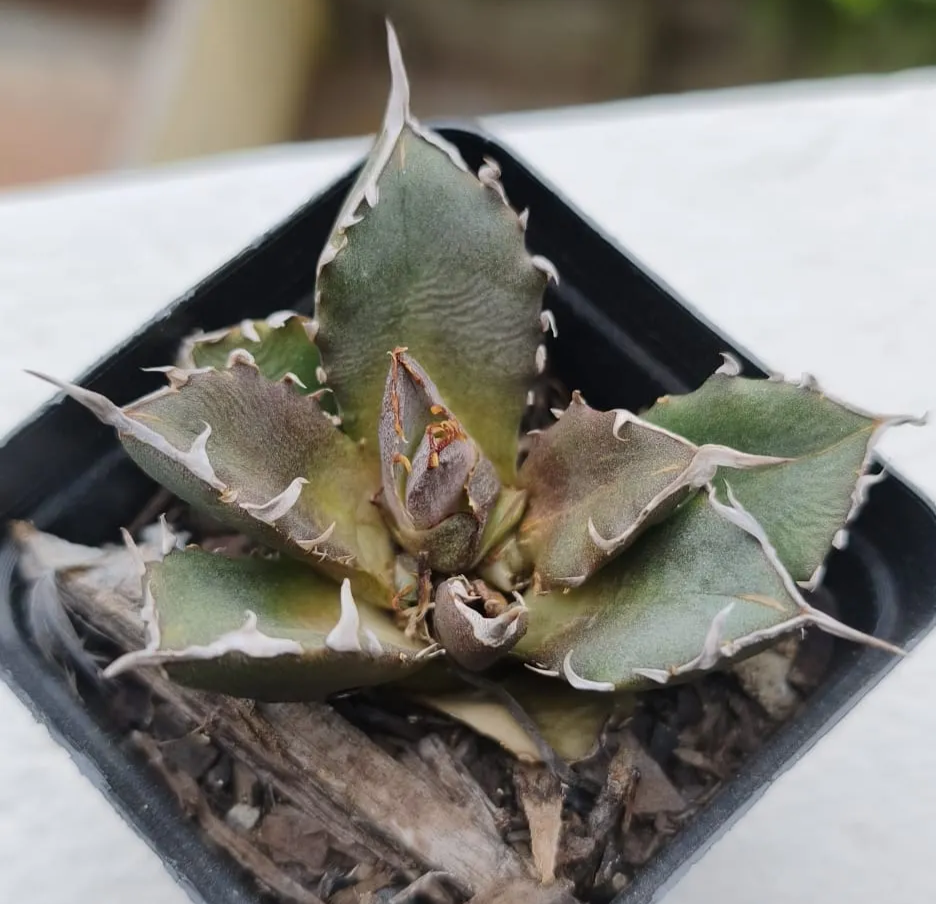
A couple months later, I kind of suddenly realized that I might not have been doing the best by the plants. They now looked like this.
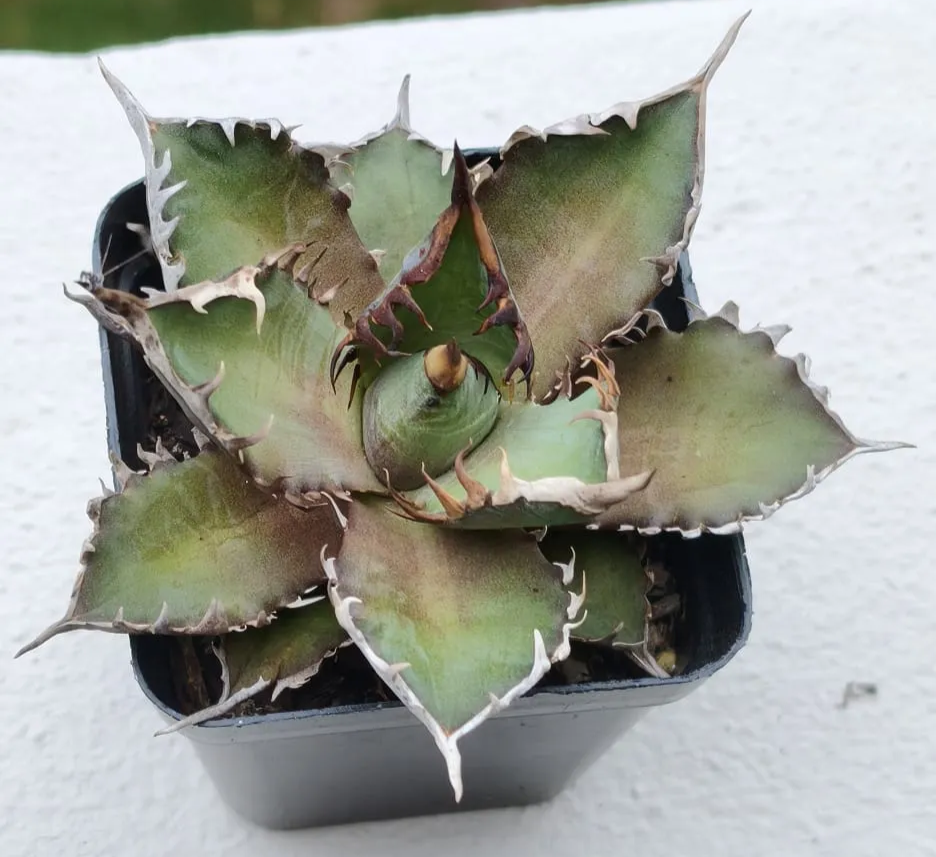
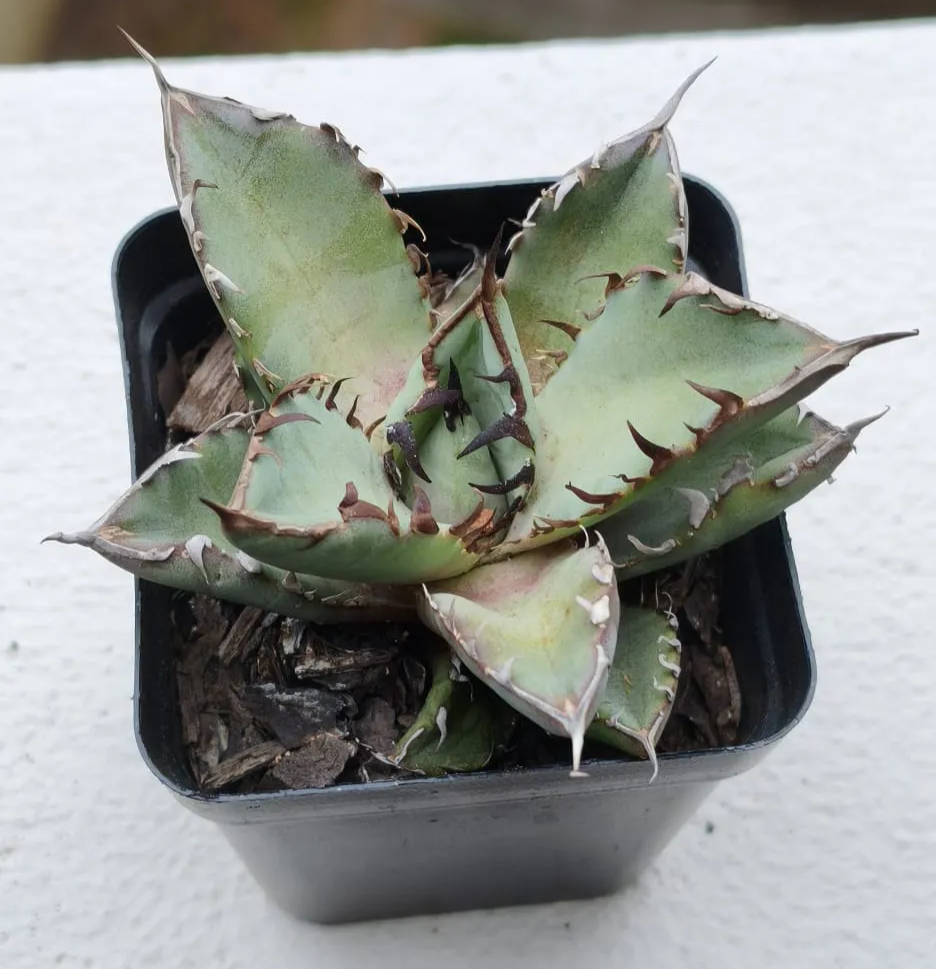
For references, when I bought them they looked something like this. Rough, I know…
3) Crossroads
I suppose it’s really only with hindsight that I can say this: at this point, it was either let’s start watering it and hope it doesn’t die from too much water, not enough water, just enough water, or even just too much hope, OR I’m just going to learn everything I could possibly learn about saving this particular type of plant, from the experts that deal with the plant species for a living. It’s not really a choice I actively made, but here we are, so I suppose you can contextually figure out what I decided.
4) ??? it = sent
So I started. Slowly at first, with the help of my favourite sycophant (and it’s twin, Gemini) for natural language translation. As I started to research more about it, the algorithms pushed more about it to me. It was at this point that I realized: “Wait a second, everything is in Japanese, the heck?”. There was basically 0 english-language resources that I could find focussed specifically on this plant. Everything, and I really do mean everything, was in Japanese. Taiwanese too sometimes, but I can’t read either so it’s really the same to me. This is the general flow of how my searches went
“how to water agave titanota” → “how often to water agave titanota” → “best soil …” → “what is akadama” → “what is hyuga” → “what is prestella” → “what is magamp k” → “best pots” → “what do japanese titanota cultivators do…” → “how to make sure soil dries properly for…” → “how to prevent root rot…” → …a ton more repeated searches with small keyword differences.
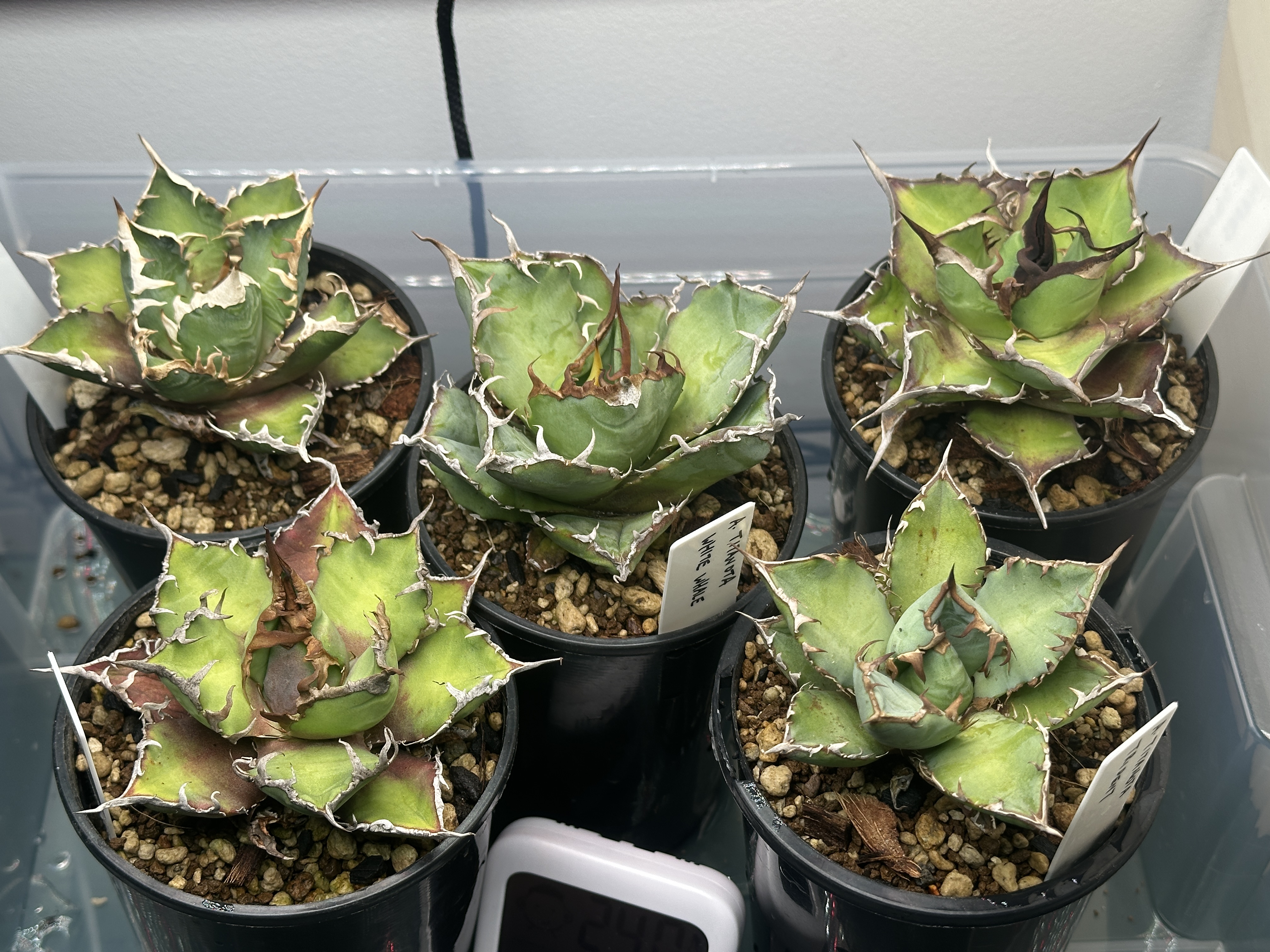
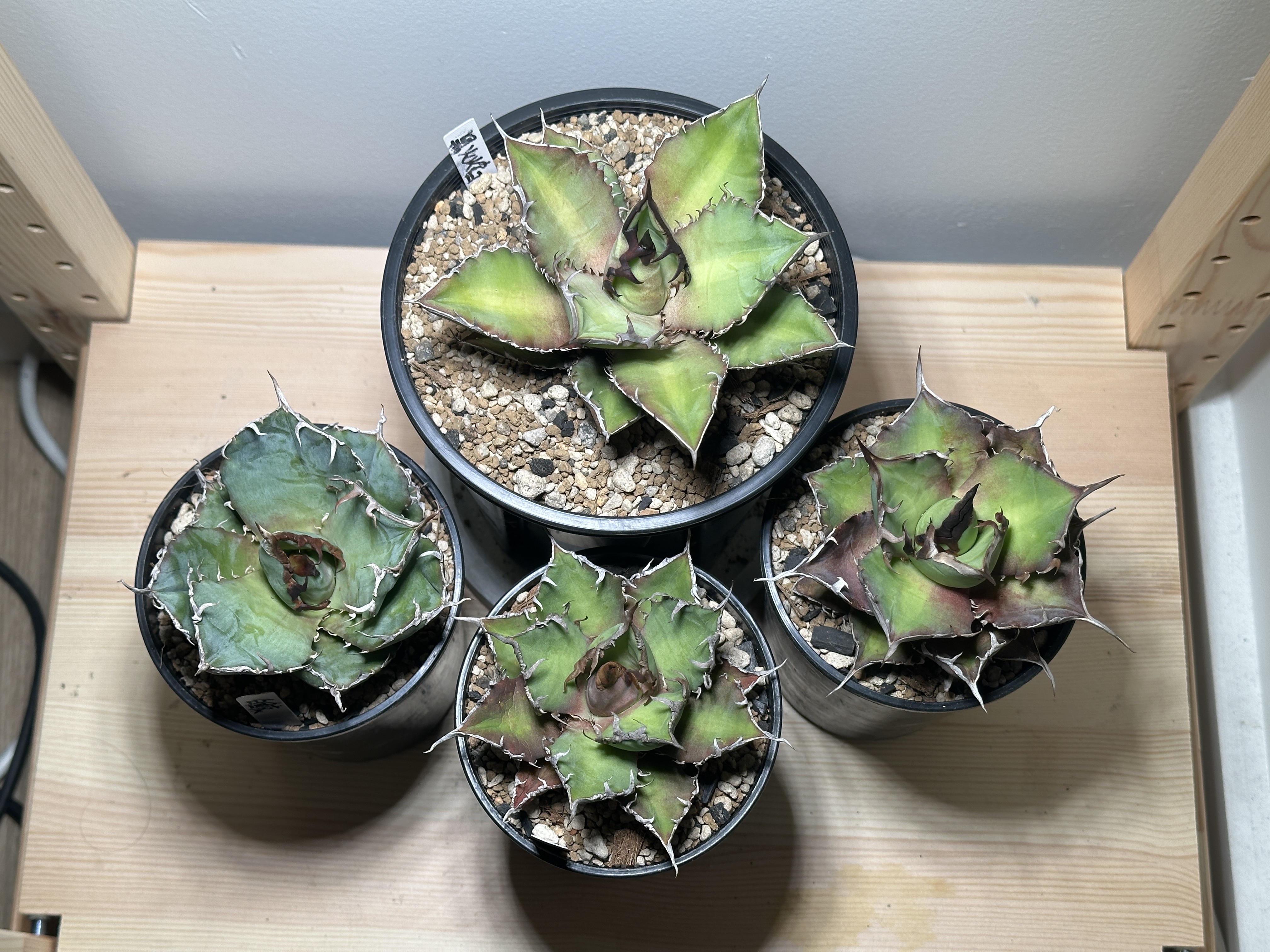
It was at around this time where I bought another 4 more plants, of different cultivars, from the same seller, as well as all the equipment I thought I would need. Here’s a picture of the 4 of them!
5) Present day minus a couple weeks
At this stage, my brand spanking new setup looked something like this:
6 plants newly repotted into a soil mix of 5 NZ Pumice : 5 3L Akadama : 1 Horticultural Charcoal : 1 Coco Coir, under a Sansi 36W grow bulb. The bulb dangled from a brand new E27 cable cord, and it was attached to the socket via a HPM analog timer to allow for 14 hours of light. I thought I was pretty set. The sycophants told me that I should wait a ~5 days before watering the healthy plants, and a week before watering the 2 OGs. I’m not a particularly patient guy, but I did it. Every day I resisted the urge to give them a good watering, and just stared at them in their dry little pots…
And then at day 5 I watered all 6 of them 👏. In my defence, I talked to a Japanese youtuber who said that he waters his plants immediately after repotting, so I thought it’d be all right.
I instantly regretted it and had flashbacks to the root rot death of the first victim, so I stuck rolled up kitchen towels up the bottom of the 2 OGs and tried to drain water from their soil. I used a bladeless fan to blow some air at them, trying to give them more airflow to alleviate the risk.
At some point here, I noticed that the healthy plants were starting to turn red (just like the OGs), which is usually a sign of too much light. I played with the height of the Sansi, but the plants kept developing redness… Argh!
6) Present day
Here are my plants! I’ll talk more about my set-up and progress in future posts. I’ll be covering the recovery of the Black Whale and Catweazle, my setup, and other things that come I come across. Stay tuned!