HOBBY 2
Agave Titanota 2:
Photobleaching
Published 18 October 2026 · 11:57 AM AEST
Since I started trying to keep Agave Titanotas a few months ago, the majority of their time have been under BRIM light panels for 14 hours a day. I run them using an timer-based mechanical switch. I bottom-water them once a week, and have them under a light panel from 4am-6pm every day. I’ll write up a post about my setup in the future.
Imagine my shock and horror when I saw this:
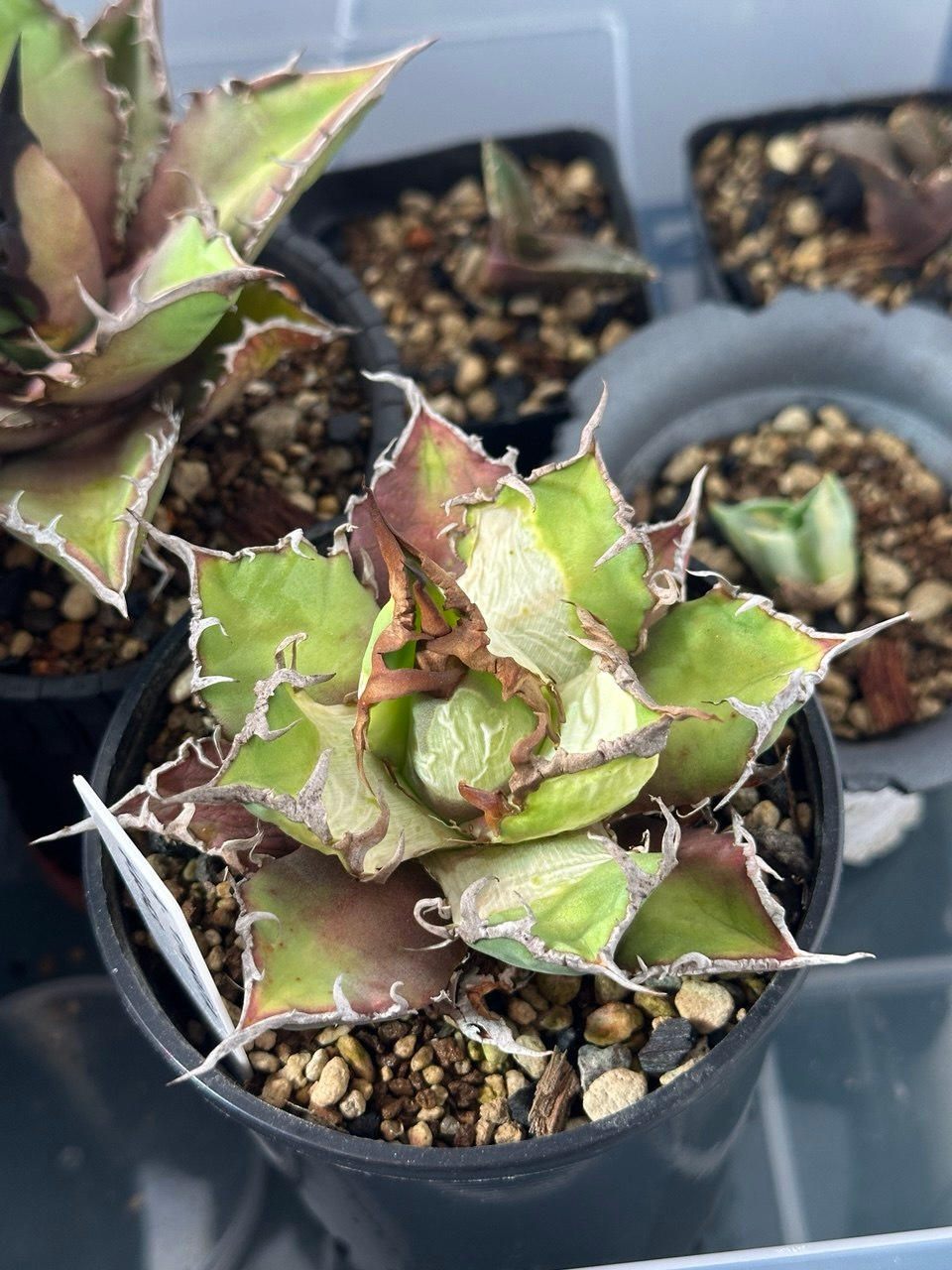
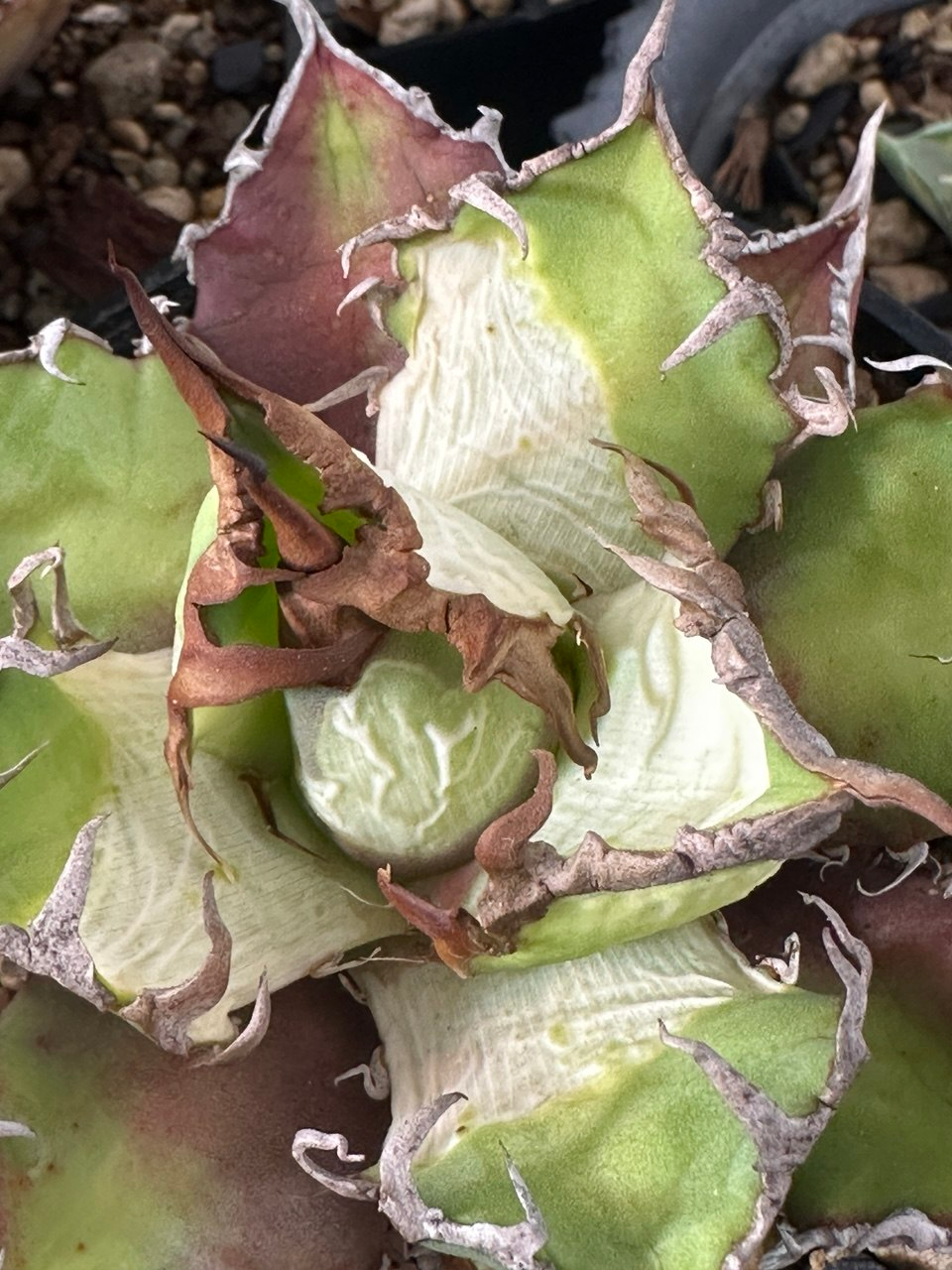
WTF IS THAT?
When I initially saw it, it looked kind of cool. It still looked like damage, but it was stiff to the touch, didn’t look wet, and didn’t smell bad. All of which was a good sign. Anyway, as you can guess by the title of this post, this is a pretty severe case of photobleaching.
Photobleaching: What is it?
In one sentence: When light overwhelms and destroys the leaf’s green colour pigments faster than the plant can protect them
More info: It’s a state of photo(meaning light)-oxidative(meaning when a substance loses electrons or gains oxygen) overload.
The leaf can’t photosynthesize the large amount pf photons it’s being flooded by. This allows a buildup of molecules called Reactive Oxygen Species (ROS), which reacts with chlorophyll molecules. This reaction is oxidization, and causes the chlorophyll to break down. Once that happens, only the fiber structure is plant ”flesh” is left, hence the pale tissue.
Okay, now that I know what the issue is, my next steps are:
- Protect the plant and try to prevent it from dying
- Prevent my other plants from photobleaching
Protecting the plant
The general advice I got was:
- keep continous fan circulation on the plant.
- do NOT cut off the damaged parts.
- Move it away from the light source that cooked it
It was really just about preventing rot and additional stresses on the plant. The continuous fan circulation should theoretically help the plant dry out, and reabsorbed the damaged bits for nutrients. So I set aside my plant, almost a full 30cm vertically away from the light, and trained a single fan on it.
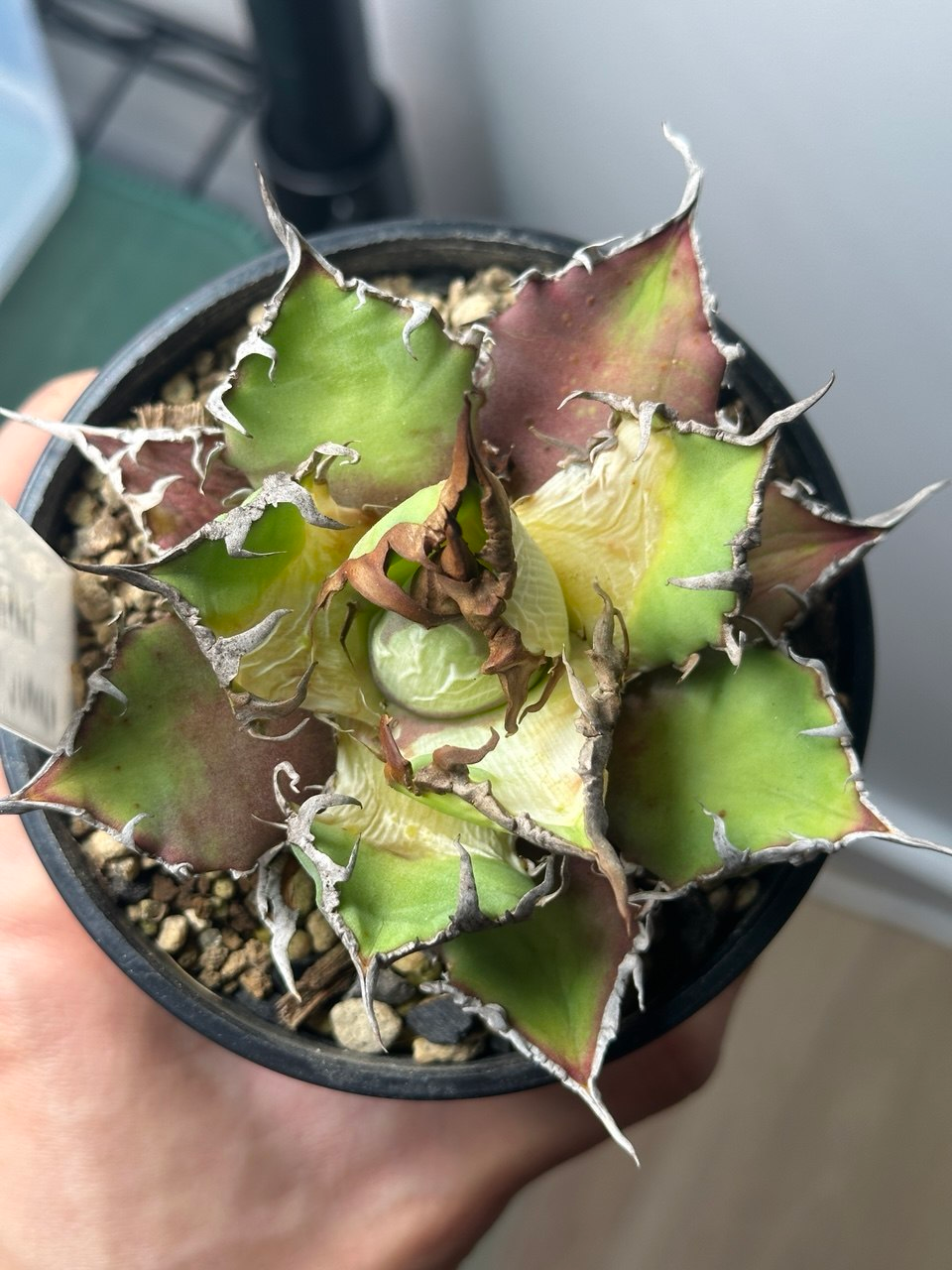
This is how it looks like 2 days later. As you can see, the damage has definitely set in, and it’s looking worse. At this point, I noticed some black dots on the edges of the plant, so I applied some contact-fungicide. I used Mancozeb Plus, because it’s all I have. I mixed a small cup of the anti-fungicide, and then used a brush to brush it on, and got it into all the nooks and crannies. You want to make sure it’s not entirely soaked, but at the same time, Mancozeb is a contact-fungicide, so you need it to be thoroughly pushed into all the little nooks.
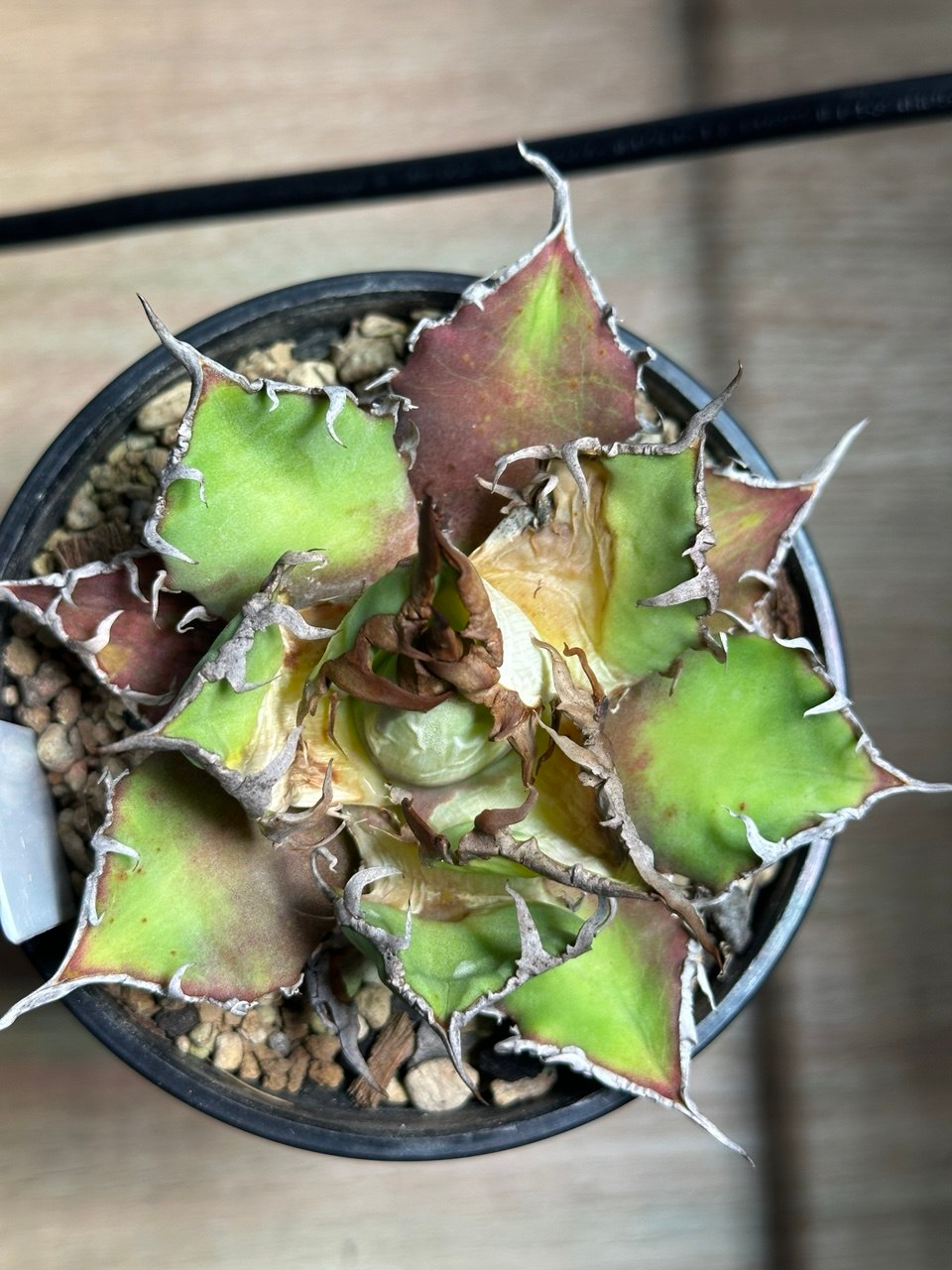
This photo is 3 days on from the Mancozeb application. The external texture of the afflicted areas are still hard, and with the Mancozeb applied, I can’t smell anything except sulfur. There are still some black dots, but there’s not much I can do at this point. It’s still sitting in the same spot, with wind constantly blowing at it to attempt to help it dry out.
Preventing future photobleaching
Honestly, after reading more into it, I don’t think there’s much I could’ve done for it. As I look through my pictures of this plant, all the only observation I can make is that it has more maroon/red stress pigmentation than the other plants of the same size. I know it’s rooted successfully, and has been unproblematic for months.
Different cultivars(cv.) of Titanotas will all have different tolerances to light. Even the same cultivars can vary from plant-to-plant. Hopefully, I’ll be able to save this plant, and in the future it’ll sit under the BRIM 45W panel instead of the BRIM 65W panel, until it’s got much more acclimatization done.
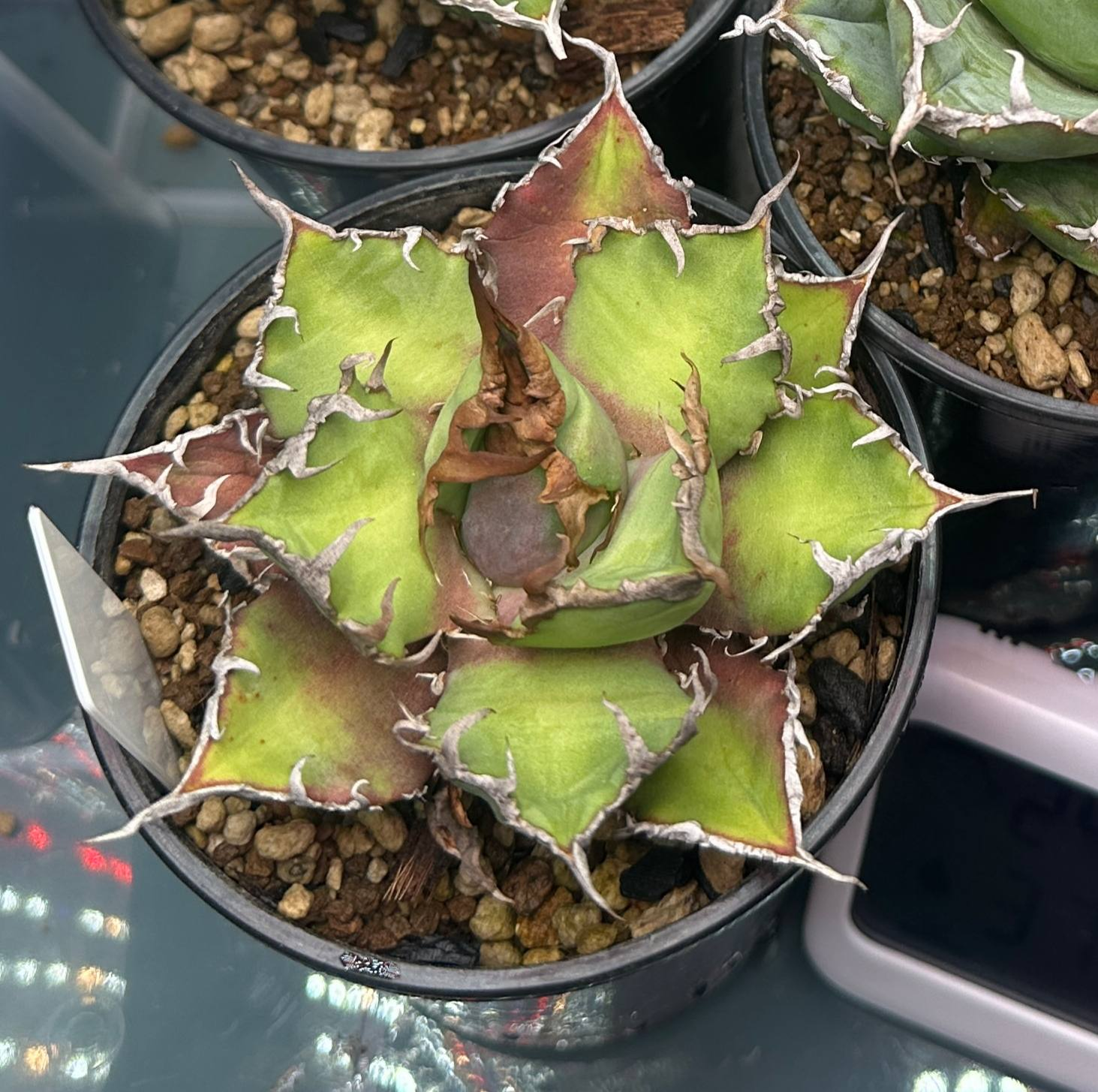
In hindsight, I can see the central, newest leaf is heavily stressed, and some of the leaves also have a lot of stress colours. This is by no means an indicator that bleaching will happening, but I suppose it CAN serve as a warning.
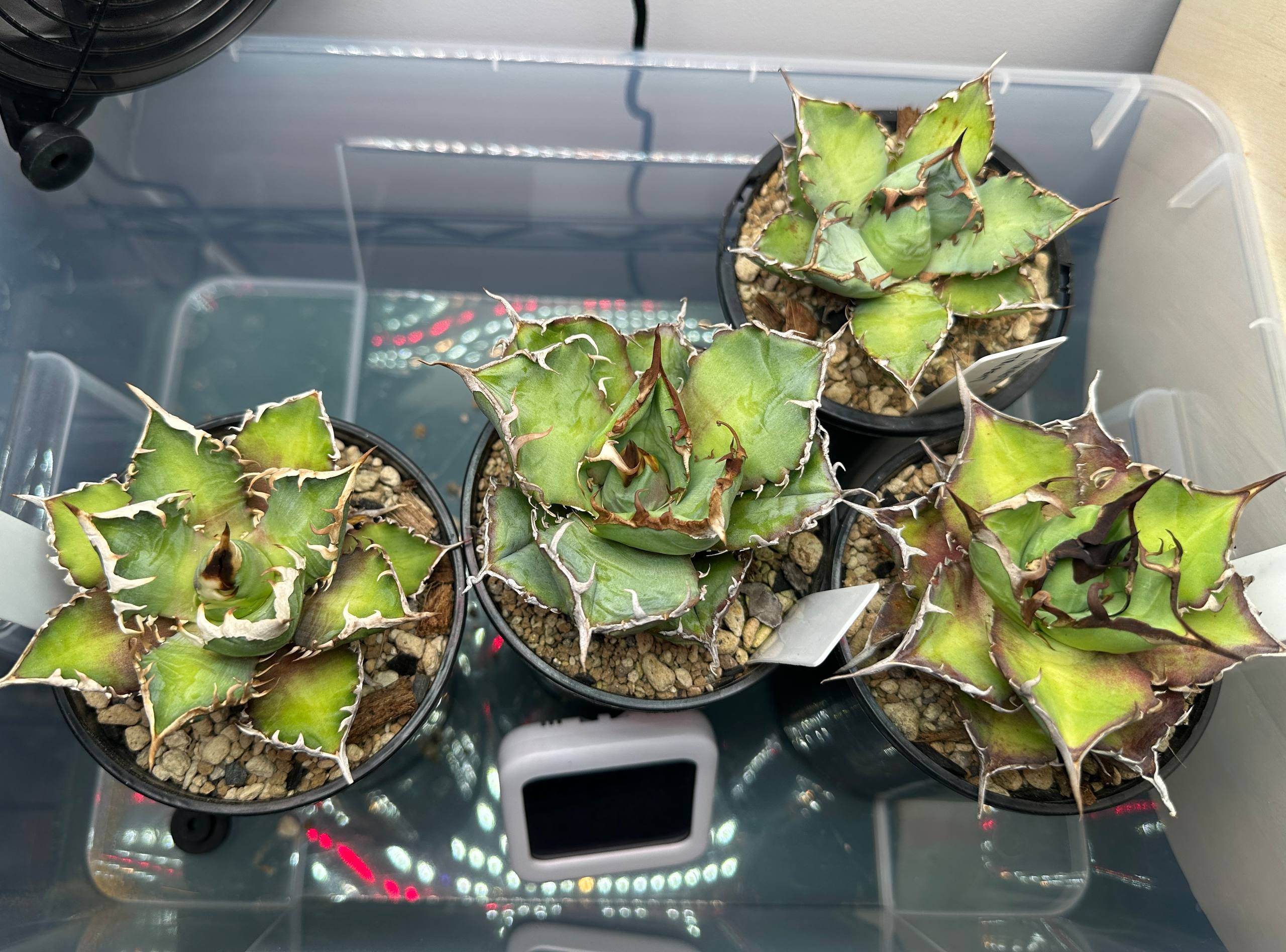
3 of them are mostly green, and the one at the bottom right is showing stress on outer leaves. The interesting thing is that the bottom right one was sold to me as the same cultivar as the one that got photobleached. They were both sold to me as “Hades”. They look nothing alike, so I don’t know if that’s true, but I’m going to take precautions by watering them more often (Maybe every 6 days instead of 7, since I know they’re dry by then). I’ve also moved the 65W panel up by about 3 cm, to reduce the amount of light. Fingers crossed!